Learn
Flour
How flour strength, protein, milling, and absorption change pizza dough.
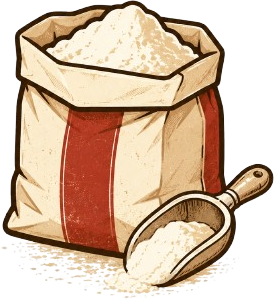
Flour is the structure of pizza dough. It decides how much water the dough can hold, how far it stretches before tearing, how it browns, and how much chew the finished crust carries.
Start with strength
Protein is useful shorthand, but it is not the whole story. Two flours with similar protein can behave differently because of milling, wheat type, and gluten quality. Strong flour gives dough more tolerance for long fermentation and high hydration. Softer flour can feel silkier and stretch more easily, but it may collapse if pushed too far.
What to watch
- Dough that tears early may need stronger flour, more rest, or gentler handling.
- Dough that resists stretching may need more time, less mixing, or a different flour blend.
- Dough that bakes pale may need a warmer oven, more fermentation, or flour with better browning behavior.
Use flour as a lever, not a fixed rule. The best flour is the one that matches your oven, fermentation schedule, and crust goal.
Bake it
Related recipes
-
Advanced
Sourdough Pizza Dough
Dough Recipes Romania 1 day 35 min 4 Dough Balls
 -
Intermediate
Pan Pizza Dough
Dough Recipes United States 12 hr 20 min 2 Portions
 -
Intermediate
Whole Wheat Pizza Dough
Dough Recipes16 hr 30 min 4 Dough Balls -
Intermediate
Sicilian Tomato Pan Pizza
Pizza Recipes Italy 12 hr 57 min 1 Pizzas
 -
Beginner
Same Day Pizza Dough
Dough Recipes5 hr 20 min 3 Dough Balls -

Intermediate
Classic Neapolitan Pizza
Pizza Recipes Italy Campania Neapolitan 1 day 53 min 4 Pizzas